
There are 254 international shares ETFs holding $192.5 billion, half of all ETF money in Australia. Broad global and US index funds such as VGS, IVV and BGBL hold half of that, at fees of 0.03% to 0.18%. Over five years to 30 September 2026, the median US fund returned 12.6% a year and the median broad global fund 10.9%. Themes, active funds and income funds mostly delivered less.
Why international shares matter
Australia makes up only about 2% of the world's share market. Without international shares you miss most of the world's largest companies, including the tech giants, global healthcare and consumer brands. That is why international shares are now the biggest part of the Australian ETF market, and why they took $2.9 billion of new money in September alone.
The choice is wide. Fees run from 0.03% (VTS) to 1.89% (ISLM), with a median of 0.55%. The 10 largest funds hold 47% of the money, while 86 funds hold less than $50 million each.
Biggest inflows to international shares ETFs in September
New money is still flowing mainly to the cheap, broad core. IVV was an exception, with $84 million of net outflows in September. Even very popular funds see money come and go from month to month.
The 25 largest international shares ETFs
| ETF | What it holds | Fee | Size | 1 year | 5 years (a year) |
|---|---|---|---|---|---|
| VGS | Vanguard developed world ex Australia | 0.18% | $18.7bn | +10.1% | +11.8% |
| IVV | iShares S&P 500 | 0.04% | $14.9bn | +10.1% | +13.4% |
| NDQ | Betashares Nasdaq 100 | 0.48% | $9.5bn | +16.6% | +15.3% |
| QUAL | VanEck International Quality | 0.40% | $9.2bn | +10.1% | +11.4% |
| VGAD | Vanguard developed world (hedged) | 0.21% | $7.9bn | +17.1% | +10.8% |
| VTS | Vanguard US Total Market | 0.03% | $7.3bn | +9.8% | +12.4% |
| VEU | Vanguard All-World ex-US | 0.07% | $6.5bn | +14.0% | +9.2% |
| IOO | iShares Global 100 | 0.40% | $6.1bn | +15.6% | +16.4% |
| DGCE | Dimensional Global Core Equity (active) | 0.36% | $5.7bn | +11.0% | n/a |
| BGBL | Betashares Global Shares | 0.08% | $5.5bn | +10.4% | n/a |
| IHVV | iShares S&P 500 (hedged) | 0.10% | $4.3bn | +15.4% | +10.9% |
| DFGH | Dimensional Global Core Equity (hedged, active) | 0.36% | $4.2bn | +18.2% | n/a |
| V1AC | Vinva Global Alpha (active) | 0.89% | $3.9bn | -4.2% | +6.2% |
| ETHI | Betashares Global Sustainability Leaders | 0.59% | $3.8bn | +6.2% | +8.5% |
| HYGG | Hyperion Global Growth (active) | 0.70% | $3.4bn | -5.9% | +8.9% |
| HGBL | Betashares Global Shares (hedged) | 0.11% | $3.0bn | +17.4% | n/a |
| TLRA | Talaria Global Equity (complex) | 1.16% | $2.8bn | +9.2% | n/a |
| QHAL | VanEck International Quality (hedged) | 0.43% | $2.7bn | +16.5% | +9.7% |
| VGE | Vanguard FTSE Emerging Markets | 0.48% | $2.2bn | +6.0% | +5.8% |
| RCAP | Resolution Capital Global Property (active) | 0.80% | $2.1bn | +7.9% | n/a |
| PGA1 | Plato Global Alpha (complex) | 0.88% | $2.0bn | +18.0% | n/a |
| IWLD | iShares Core MSCI World ex Australia ESG | 0.09% | $2.0bn | +10.4% | +12.3% |
| IAA | iShares Asia 50 | 0.29% | $1.8bn | +50.1% | +15.1% |
| IEM | iShares MSCI Emerging Markets | 0.69% | $1.8bn | +21.2% | +8.2% |
| FANG | Global X FANG+ | 0.35% | $1.8bn | +10.6% | +20.9% |
Fees, size and total returns including distributions to 30 September 2026. Five-year figures are compound annual; n/a means under five years old. Source: TMX Australia monthly funds report.
The other 229 funds share the remaining 31% of the money. For the full list, sort by size or fee in our ETF directory, or browse the global and US shares pages.
Eight types of international shares ETF
We grouped all 254 funds by what they do. The group you pick matters far more than the issuer.
| Type | Funds | Assets | Median fee | Median 5 years (a year) | Examples |
|---|---|---|---|---|---|
| Broad global | 15 | $53.2bn | 0.18% | +10.9% | VGS, BGBL, VGAD, IOO |
| US shares | 22 | $42.7bn | 0.24% | +12.6% | IVV, NDQ, VTS, IHVV |
| Active | 88 | $39.1bn | 0.93% | +7.5% | DGCE, DFGH, V1AC, HYGG |
| Regions and emerging markets | 29 | $22.8bn | 0.48% | +8.9% | VEU, VGE, IAA, IEM |
| Factor and smart beta | 25 | $18.9bn | 0.35% | +8.8% | QUAL, QHAL, MOAT, VLUE |
| Themes and sectors | 51 | $12.2bn | 0.57% | +5.5% | HACK, SEMI, GDX, IXJ |
| Income and covered call | 18 | $2.3bn | 0.40% | +9.0% | WDIV, UMAX, JEPI |
| Geared and short | 6 | $1.2bn | 0.90% | mixed | GGUS, GHHF, BBUS |
ReviewETF grouping of the TMX "Equity - International" category. Median five-year return covers funds with a five-year record only (just 4 income funds). Data to 30 September 2026. Source: TMX Australia monthly funds report.
Share of international shares ETF money by type
Median return a year over five years, by type
Broad global and US funds: the core
For most investors, this is where international exposure starts. A broad global fund such as VGS or BGBL holds well over a thousand companies across the US, Europe and Japan. A US fund such as IVV or VTS concentrates on the world's biggest market. Both are cheap, and both have done well.
- Global or US? US funds won over five years (12.6% vs 10.9% a year at the median), driven by the tech giants. A global fund spreads your risk beyond one country. Compare VGS vs IVV and IVV vs VTS.
- Same job, lower fee. BGBL (0.08%) tracks a very similar index to VGS (0.18%). See VGS vs BGBL.
- Nasdaq. NDQ returned 15.3% a year but is far more concentrated in tech. Compare IVV vs NDQ.
- Hedged or not? Most core funds come in hedged and unhedged versions. Hedged versions won by 5 to 7 points last year as the Australian dollar rose; unhedged won over five years. Our hedged vs unhedged guide explains.
How much the five biggest companies make up
Regions, factors and themes
- Regions and emerging markets. VEU covers everything outside the US for 0.07%. Asia had a strong year: IAA rose 50.1% and IEM 21.2%. Over five years emerging markets were more modest, with VGE at 5.8% a year. See emerging markets and Asia ETFs.
- Factor funds tilt towards quality, value or other traits. QUAL is the largest at $9.2 billion and returned 11.4% a year, close to VGS. Compare VGS vs QUAL.
- Themes and sectors produced the biggest winners and losers. SEMI returned 35.2% a year over five years, while the median theme fund returned just 5.5%. See tech and AI ETFs.
Active, income and geared funds
Active funds are the largest group by number, 88 of them, with a median fee of 0.93% a year. A few are big, such as Dimensional's DGCE and DFGH, which charge a moderate 0.36%. But of the 19 active funds with a five-year record, the median returned 7.5% a year, well behind the 10.9% of the broad global index. Large active funds like V1AC and HYGG fell over the past year. Compare VGS vs V1AC.
Income funds, including covered-call funds like UMAX and JEPI, aim for higher regular payments, usually by giving up some growth. Geared funds such as GGUS magnify gains and losses and suit experienced investors only.
Compare the core international funds →
Common questions
What is the best international shares ETF in Australia?
There is no single best. VGS is the largest global fund, BGBL is a cheaper alternative at 0.08%, and IVV is the cheapest large US fund at 0.04%. They suit investors wanting broad, low-cost exposure.
Should I choose VGS or IVV?
IVV holds only US shares and returned more over five years (13.4% vs 11.8% a year). VGS spreads across developed markets including Europe and Japan. Many investors use one or the other, not both.
How many international ETFs do I need?
For most investors, one or two. A broad global fund covers thousands of companies. Adding more funds often adds overlap rather than diversification.
Are international ETF distributions franked?
Generally no. Overseas companies do not pay Australian franking credits, so distributions from international share ETFs are usually unfranked, and may include foreign income tax offsets.
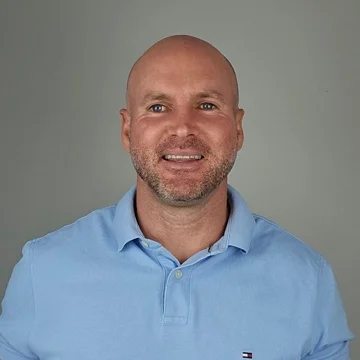
Joshua Stega is a financial adviser with 20 years' experience and the founder of ETF Adviser. He built ReviewETF to make every Australian ETF easy to find and compare.
General information only. It does not take into account your objectives, financial situation or needs. Consider the PDS and TMD before investing. Past performance is not a reliable indicator of future performance. Data as at 30 September 2026.