
ASX ETF fees range from 0.03% a year (VTS, MQAE and A300) to 1.89% (ISLM), a 63-fold gap. The median fund charges 0.45%. But because most money sits in cheap index funds, the average dollar invested pays just 0.32%. Fees are not the only thing that matters, but they are the one cost you can be certain of.
What the fee figure means
The fee shown here is the management expense ratio (MER), the yearly cost of running the fund, taken out of the fund's value a little each day. You never see a bill. You simply get a slightly lower return. On $100,000, a 0.04% fee costs $40 a year; a 1.00% fee costs $1,000.
Some active and complex funds also charge a performance fee on top, when they beat a target. That is not included in the MER, so the true cost in a good year can be higher. Always check the product disclosure statement (PDS) for the full fee picture, and remember that buying and selling also costs you the bid-ask spread and brokerage.
What you pay each year on $100,000
The fee landscape
Only 70 of the 508 ETFs charge less than 0.20% a year, yet those funds hold about 40% of all ETF money in Australia. At the other end, 56 funds charge 1% or more and hold under 4%.
Where the money sits, by fee band
The 25 cheapest ETFs on the ASX
| # | ETF | What it holds | Fee | Size |
|---|---|---|---|---|
| 1 | VTS | Vanguard US Total Market | 0.03% | $7.3bn |
| 2 | MQAE | Macquarie Core Australian Equity Active | 0.03% | $1.3bn |
| 3 | A300 | Global X Australia 300 | 0.03% | $23m |
| 4 | IVV | iShares S&P 500 | 0.04% | $14.9bn |
| 5 | A200 | Betashares Australia 200 | 0.04% | $11.1bn |
| 6 | IOZ | iShares Core S&P/ASX 200 | 0.05% | $9.7bn |
| 7 | STW | SPDR S&P/ASX 200 | 0.05% | $6.5bn |
| 8 | E200 | SPDR S&P/ASX 200 ESG | 0.05% | $474m |
| 9 | VAS | Vanguard Australian Shares | 0.07% | $26.7bn |
| 10 | VEU | Vanguard All-World ex-US | 0.07% | $6.5bn |
| 11 | BILL | iShares Core Cash | 0.07% | $1.3bn |
| 12 | WXOZ | SPDR World ex Australia Carbon Aware | 0.07% | $858m |
| 13 | IJR | iShares S&P US Small-Cap | 0.07% | $827m |
| 14 | IJH | iShares S&P US Mid-Cap | 0.07% | $485m |
| 15 | V500 | Vanguard S&P 500 | 0.07% | $183m |
| 16 | COMP | Betashares Ausbond Composite | 0.07% | $9m |
| 17 | BGBL | Betashares Global Shares | 0.08% | $5.5bn |
| 18 | MQEG | Macquarie Core Global Equity Active | 0.08% | $234m |
| 19 | IWLD | iShares Core MSCI World ex Australia ESG | 0.09% | $2.0bn |
| 20 | IESG | iShares Core MSCI Australia ESG | 0.09% | $607m |
| 21 | SPY | SPDR S&P 500 | 0.09% | $403m |
| 22 | V5AH | Vanguard S&P 500 (Hedged) | 0.09% | $28m |
| 23 | MQFI | Macquarie Core Australian Bond Active | 0.09% | $2m |
| 24 | IHVV | iShares S&P 500 AUD Hedged | 0.10% | $4.3bn |
| 25 | VAF | Vanguard Australian Fixed Interest | 0.10% | $3.9bn |
Management fees (MER) and fund size at 30 September 2026. Ties sorted by size. IAF also charges 0.10%. Source: TMX Australia monthly funds report.
The list is almost entirely index funds tracking big, well-known markets: the ASX 200, the S&P 500 and global developed shares. Competition between Vanguard, iShares, Betashares and State Street has pushed these fees close to zero. Notice too that several of the cheapest funds are tiny, such as COMP ($9 million) and MQFI ($2 million). Small funds can have wider buy-sell spreads and a higher chance of closing, so the headline fee is not the whole story.
See every low-cost ETF on one page →
The 15 most expensive ETFs
| ETF | What it does | Fee | Size |
|---|---|---|---|
| ISLM | Hejaz Equities Fund (active, Sharia-screened) | 1.89% | $70m |
| ZILR | Ziller Global Fund (active) | 1.53% | $13m |
| BEAR | Betashares Australian Equities Bear (short) | 1.48% | $32m |
| BBOZ | Betashares Australian Strong Bear (geared short) | 1.38% | $165m |
| BBUS | Betashares US Strong Bear (geared short) | 1.38% | $127m |
| AUDS | Betashares Strong Australian Dollar (geared currency) | 1.38% | $21m |
| YANK | Betashares Strong US Dollar (geared currency) | 1.38% | $6m |
| MAET | Munro Global Growth (complex) | 1.35% | $374m |
| B1SM | Bell Global Emerging Companies (active) | 1.34% | $133m |
| SKUK | Hejaz Sukuk (active, Islamic bonds) | 1.33% | $5m |
| MOGL | Montaka Global Fund (active) | 1.32% | $139m |
| LHGG | Lakehouse Global Growth (active) | 1.30% | $234m |
| OOO | Betashares Crude Oil (futures-based) | 1.29% | $114m |
| MQWS | Macquarie Walter Scott Global Equity (active) | 1.28% | $25m |
| T8EV | T8 Energy Vision (active) | 1.25% | $29m |
Management fees at 30 September 2026. Several other active funds also charge 1.25%. Performance fees, where they apply, are extra. Source: TMX Australia monthly funds report.
Two kinds of fund dominate the expensive end: active managers running concentrated portfolios, and complex products that use derivatives, gearing or short selling. Some of these funds have done well; OOO returned 80.8% over the past year. But a high fee is a hurdle the manager has to clear every single year before you see any benefit.
Typical fees by asset class
Median fee in each type of ETF
International shares has the highest median fee because it contains so many active and thematic funds. Yet it also has some of the cheapest funds on the market, such as VTS, IVV and BGBL. Within any category, the spread between cheapest and dearest is far bigger than the gap between categories. Active funds overall have a median fee of 0.73%, more than double the 0.34% median for index funds.
Fees compound, every single year
What fees cost on $100,000 over 20 years
Over 20 years, the difference between a 0.07% fund and a 1.00% fund on $100,000 is more than $61,000, assuming the same return before fees. That is why low fees matter most for the long-term core of a portfolio, the money you plan to hold for decades.
What the data tells us
- Cheap funds are almost always index trackers of large, popular markets. Competition keeps pushing these fees down.
- Active management costs a premium. Some managers earn it, many do not. See active vs passive ETFs.
- Expensive funds are often niche or complex. Gearing, short selling and futures cost more to run and carry extra risk.
- Near-identical funds can charge different fees. A200 charges 0.04% and VAS 0.07% for very similar portfolios. See VAS vs A200 and IVV vs SPY.
- Fees do not predict winners on their own. Across all ETFs, the link between fees and five-year returns is weak. Asset type matters far more. But within the same market, the cheaper fund usually keeps more.
Compare fees and returns side by side →
For the complete ranking of every fund, sort by fee in our ETF directory.
Common questions
What is the cheapest ETF in Australia?
At 30 September 2026, three ETFs charge 0.03% a year: VTS (Vanguard US Total Market), MQAE (Macquarie Core Australian Equity Active) and A300 (Global X Australia 300). IVV and A200 follow at 0.04%.
What is a good fee for an ETF?
For a broad Australian or global share index fund, fees under 0.20% a year are common and many are below 0.10%. Specialist, active and complex funds typically charge 0.50% to 1.30%.
Are ETF fees charged separately?
No. The management fee is deducted from the fund's assets daily and is already reflected in the unit price and returns. You pay brokerage and the buy-sell spread separately when you trade.
Do higher fee ETFs perform better?
Not reliably. Across all ASX ETFs there is no meaningful positive link between fees and five-year returns. Some expensive funds have done very well, but a higher fee is a hurdle every year.
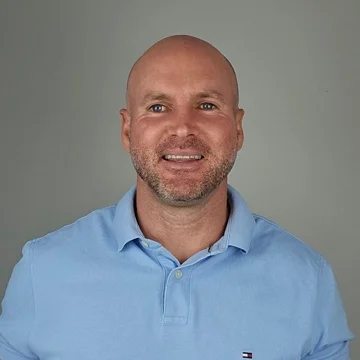
Joshua Stega is a financial adviser with 20 years' experience and the founder of ETF Adviser. He built ReviewETF to make every Australian ETF easy to find and compare.
General information only. It does not take into account your objectives, financial situation or needs. Consider the PDS and TMD before investing. Past performance is not a reliable indicator of future performance. Data as at 30 September 2026.