
All the unhedged physical gold ETFs returned between +1.7% and +1.9% over the year to 30 September 2026, because they hold the same metal. So fees decide it: PMGOLD and GXLD cost 0.15% a year, against 0.40% for the much larger GOLD. Hedged QAU won this year as the Australian dollar rose, but lagged by 30 points over five years. Miners like GDX magnify gold's moves in both directions.
Why gold, and why an ETF?
Gold earns no income, so its appeal is different from shares. Investors hold it as insurance: it has often held its value when share markets fall, when inflation rises or when the world feels uncertain. It also behaves differently from almost everything else in a typical Australian portfolio. Our overlap check shows gold miners fund GDX shares just 0.1% with VGS.
Buying bars or coins means paying a dealer's margin, storing them safely and insuring them. A gold ETF holds the metal in a vault for you, trades like a share, and can be bought for the cost of brokerage. Australians have put about $11.1 billion into physical gold ETFs, and added another $164 million in September.
The physical gold ETFs, side by side
| ETF | Issuer | Hedged? | Fee | Size | 1 year | 5 years |
|---|---|---|---|---|---|---|
| GOLD | Global X | No | 0.40% | $5.8bn | +1.7% | +144.5% |
| PMGOLD | Perth Mint | No | 0.15% | $2.4bn | +1.9% | +147.4% |
| GXLD | Global X | No | 0.15% | $0.8bn | +1.9% | n/a |
| GLDN | iShares | No | 0.18% | $0.5bn | +1.8% | n/a |
| NUGG | VanEck | No | 0.25% | $0.2bn | +1.8% | n/a |
| QAU | Betashares | Yes | 0.59% | $1.2bn | +6.3% | +116.9% |
| GHLD | Global X | Yes | 0.35% | $0.2bn | +5.7% | n/a |
Cumulative total returns to 30 September 2026. Source: TMX Australia monthly funds report.
Over three years the unhedged funds with a record returned 104.8% to 106.1%, roughly 27% a year. The small gaps between them come almost entirely from fees.
What fees cost on $100,000 over 20 years
Why GOLD is still the biggest
If PMGOLD and GXLD are cheaper, why does GOLD hold $5.8 billion? It has been around since 2003, it is very easy to trade in large amounts, and many investors simply bought it first and never switched. For a buy-and-hold investor, though, the 0.25% a year fee gap adds up.
- PMGOLD is issued by the Perth Mint, which is owned by the West Australian government and whose obligations carry a state government guarantee. Some investors value that Australian backing.
- GXLD matches PMGOLD's fee with Global X's structure, and took in $33.7 million in September.
- GLDN suits investors who keep everything with iShares.
Compare them directly: PMGOLD vs GXLD, GOLD vs PMGOLD, PMGOLD vs GLDN and GOLD vs GLDN.
Hedged or unhedged gold?
Gold is priced in US dollars. An unhedged fund gives you the gold price plus the currency move; a hedged fund like QAU or GHLD strips out the currency so you get the US dollar gold price.
QAU minus PMGOLD: who won, and by how much
When the Australian dollar strengthened over the past year, hedged won. Over five years, a weaker Australian dollar added a lot to unhedged returns. There is also a natural pattern worth knowing: the Australian dollar often falls in a crisis, which is exactly when gold investors want protection. Unhedged gold gets that double cushion. QAU also charges 0.59%, so it costs more to hold. See GOLD vs QAU, QAU vs GXLD and our hedged vs unhedged guide.
Gold miners: more upside, more downside
GDX owns about 110 global gold miners, led by Newmont, Agnico Eagle and Barrick. A miner's costs are largely fixed, so when the gold price rises, profits rise faster. That is why GDX returned +223.6% over five years against about +147% for PMGOLD.
Four miners make up more than a third of GDX
The leverage cuts both ways. In September alone, physical gold ETFs fell 3.1% to 3.5% and GDX fell 7.5%. Miners also carry company risks that bars do not: rising costs, debt, accidents and the politics of the countries they mine in. MNRS is the currency-hedged alternative at 0.57%. See GDX vs MNRS.
Gold, hedged gold, miners and silver
Silver, platinum and baskets
- Silver. ETPMAG holds physical silver for 0.49% and returned +22.0% over the year and +185.7% over five. Silver is used heavily in industry, including solar panels, so it swings more than gold. See ETPMAG vs GLDN.
- Precious metals basket. ETPMPM mixes gold, silver, platinum and palladium for 0.44%. Its five-year return of +99.7% trailed gold, held back by palladium.
- Platinum and palladium. Single-metal funds exist, but palladium has fallen 34.5% over five years. These are niche, volatile holdings.
For the wider resources picture, including copper and uranium, see our guide to commodity and resource ETFs.
How investors typically use gold
- As a diversifier. Many investors who hold gold keep it to a modest slice, often 5 to 10% of the portfolio, and rebalance when it runs well ahead.
- Low-cost bullion for the core of it. PMGOLD, GXLD or GLDN suit buy-and-hold investors.
- Miners as a satellite. GDX or MNRS suit those who accept bigger swings for more upside.
- Remember the income gap. Gold pays no distributions. Retirees drawing an income need that cash to come from elsewhere in the portfolio.
See every fund on the gold and precious metals ETFs page.
Compare the gold ETFs side by side →
Common questions
What is the cheapest gold ETF in Australia?
PMGOLD and GXLD both charge 0.15% a year. GLDN charges 0.18%, NUGG 0.25% and GOLD 0.40%. On $100,000 over 20 years, the gap between 0.15% and 0.40% is about $17,000 in returns given up.
Is PMGOLD or GOLD better?
They track the same metal. PMGOLD is cheaper (0.15% vs 0.40%) and returned slightly more over five years, +147.4% vs +144.5%. GOLD is larger and very liquid, which matters mainly for very big trades.
Should I buy a hedged gold ETF?
A hedged fund like QAU removes the Australian dollar's effect. It won by 4.4 points over the past year, but lost by 30.5 points over five years. Unhedged gold also tends to benefit when the Australian dollar falls in a crisis.
Are gold miners better than physical gold?
Miners have returned more over five years (GDX +223.6% vs PMGOLD +147.4%), but they fall harder when gold falls and carry company risks. They suit investors who want more growth and accept bigger swings.
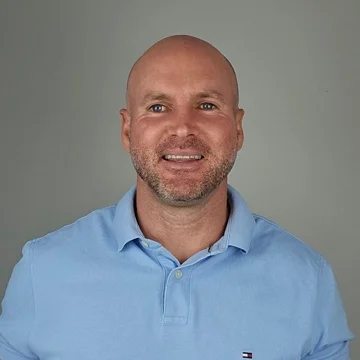
Joshua Stega is a financial adviser with 20 years' experience and the founder of ETF Adviser. He built ReviewETF to make every Australian ETF easy to find and compare.
General information only. It does not take into account your objectives, financial situation or needs. Consider the PDS and TMD before investing. Past performance is not a reliable indicator of future performance. Data as at 30 September 2026.