
Over five years to 30 September 2026, the top performers were narrow bets: semiconductors (SEMI, 35.2% a year), silver (ETPMAG, 23.4%) and Australian resources (MVR, 13.7%). For the core of a portfolio, broad low-cost funds such as A200 (0.04%), IVV (0.04%), VGS (0.18%) and DHHF (0.19%) have done the job well for a tiny fee.
How we ranked them
There are about 500 ETFs listed in Australia, and "best" depends on what you want a fund to do. So this guide uses two lenses.
- The leaderboard. Gold, silver and bronze in each asset class by 5-year total return (including distributions), among funds with at least $50 million invested. Five years smooths out a single lucky year.
- The workhorses. The broad, low-cost funds that most investors use for the bulk of their money, judged on fee, size and how well they have delivered the market's return.
Returns are shown per year unless we say otherwise. Every figure comes from the TMX Australia monthly funds report to 30 September 2026. For the monthly winners, see the ETF Awards.
The 5-year leaderboard
| Asset class | 🥇 Gold | 🥈 Silver | 🥉 Bronze |
|---|---|---|---|
| International shares | SEMI 35.2% | GDX 26.5% | MNRS 24.6% |
| Commodities | ETPMAG 23.4% | PMGOLD 19.9% | GOLD 19.6% |
| Australian shares | MVR 13.7% | QRE 13.0% | OZR 12.9% |
| Diversified (all-in-one) | DHHF 9.2% | VDHG 7.7% | VDGR 5.9% |
| Property & infrastructure | VBLD 6.0% | IFRA 5.3% | MICH 5.2% |
| Australian bonds | EHF1 4.5% | SUBD 4.2% | HBRD 4.0% |
| International bonds | EBND 3.4% | PAYS 3.0% | GCAP 2.3% |
| Cash | ISEC 3.2% | AAA 3.2% | BILL 3.1% |
5-year total returns a year to 30 September 2026, funds with $50m or more. Source: TMX Australia monthly funds report.
The best 5-year return in each asset class
What the leaderboard is really telling you
Look at the medal winners and a pattern jumps out. Almost every one is a narrow fund: chip makers, gold miners, silver, mining and energy companies, hybrids. None of the top three in Australian shares is a broad market fund. All three hold resources companies.
That is normal. In any five-year stretch, one slice of the market does far better than the average, and the funds that hold only that slice top the table. The catch is that the slice changes. Narrow funds can also fall harder, and last period's winner is often not the next one.
Sector winners vs the broad market funds, 5 years
The workhorses: best core ETFs by job
These are the funds that most Australian portfolios are built on. They will rarely top a leaderboard, but they deliver the market's return for a very small fee, and they are large and easy to trade.
| Job | ETF | Fee | Size | 5 years (a year) |
|---|---|---|---|---|
| Australian shares | A200 | 0.04% | $11.1bn | 6.9% |
| Australian shares | VAS | 0.07% | $26.7bn | 6.5% |
| Global shares | VGS | 0.18% | $18.7bn | 11.8% |
| Global shares | BGBL | 0.08% | $5.5bn | 18.7% (3 years) |
| US shares | IVV | 0.04% | $14.9bn | 13.4% |
| All-in-one | DHHF | 0.19% | $1.7bn | 9.2% |
| Australian bonds | VAF | 0.10% | $3.9bn | -0.1% |
| Cash | AAA | 0.18% | $5.1bn | 3.2% |
| Gold | PMGOLD | 0.15% | $2.4bn | 19.9% |
Total returns to 30 September 2026. BGBL listed in 2023, so its 3-year figure is shown. Source: TMX Australia monthly funds report.
What $10,000 in each core fund grew to over 5 years
Two things stand out. Global shares beat Australian shares by a wide margin over this period, helped by large US technology companies and a weaker Australian dollar. And Australian bonds went backwards over five years, because interest rates rose sharply from 2022 and pushed bond prices down. Over the last three years VAF has recovered to 3.4% a year.
Choosing between the core funds
- Australian shares: A200, IOZ and VAS are more than 90% the same. A200 is cheapest; VAS adds about 100 smaller companies. See VAS vs A200 vs IOZ.
- Global shares: VGS is the biggest. BGBL tracks a similar index for less than half the fee. See VGS vs BGBL.
- US shares: IVV is among the cheapest funds on the ASX at 0.04%. Note that more than two-thirds of VGS is already US companies, so IVV and VGS overlap heavily. See VGS vs IVV.
- One fund for everything: DHHF holds Australian, global and emerging market shares in one fund, with no bonds. VDHG holds about 10% in bonds and cash, which explains part of its lower return. See VDHG vs DHHF.
- Defensive money: cash ETFs like AAA give steady returns. Bond funds like VAF can fall when rates rise, but tend to help when share markets fall sharply.
What the fee costs on $100,000 over 20 years
What about the 1-year winners?
Over the 12 months to September, the top performers were even more extreme. The South Korea fund IKO returned +125.3%, SEMI +109.0% and the oil fund OOO +80.8%. Meanwhile every bitcoin ETF fell about 31%. One year is a very short window. These are stories worth understanding, not a reason on their own to buy. The 1-year leaderboard covers them in more detail.
See the full best ETFs list, updated monthly →
Common questions
What is the best ETF in Australia right now?
It depends on the job. Over five years to September 2026 the top performer with $50m or more was SEMI at 35.2% a year, but it holds only about 30 chip companies. For a broad core holding, A200, VAS, VGS, IVV and DHHF are the most widely used low-cost options.
What is the best ETF for beginners in Australia?
Many beginners start with an all-in-one fund such as DHHF or VDHG, which spread money across thousands of companies in one trade, or a pair of broad funds such as A200 and VGS.
Which ETF has the lowest fee in Australia?
VTS, which covers the whole US share market, charges 0.03% a year. A200 and IVV charge 0.04%.
Should I buy last year's best performing ETF?
Past performance is not a reliable guide to the future. Top performers are usually concentrated in one sector or country, which can reverse sharply. Many investors keep them to a small part of their portfolio, if at all.
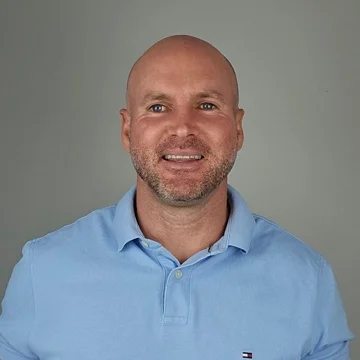
Joshua Stega is a financial adviser with 20 years' experience and the founder of ETF Adviser. He built ReviewETF to make every Australian ETF easy to find and compare.
General information only. It does not take into account your objectives, financial situation or needs. Consider the PDS and TMD before investing. Past performance is not a reliable indicator of future performance. Data as at 30 September 2026.