
About 60 theme ETFs on the ASX hold roughly $29 billion. In the year to 30 September 2026 the AI and chips theme averaged +35%, led by SEMI at +109%. Crypto averaged −30%, uranium −17% and defence −15%. Theme funds charge about 0.45 to 0.70% a year on average, three to four times a broad index fund. Only about 15 pass a basic screen of size, track record and fee.
What counts as a theme ETF
A theme ETF buys companies linked to one idea, such as artificial intelligence, cybersecurity, uranium or defence, instead of a whole market. The appeal is obvious: if you are right about the trend, a focused fund can beat the market by a wide margin. The risks are just as clear: concentration, high fees, and the habit of new theme funds launching after a theme has already run hard.
This guide ranks the ten main themes covered on ReviewETF. For comparison, the broad global shares fund VGS returned +10.1% over the year and +64.1% over three years, for a fee of 0.18%.
Every theme, ranked
| Theme | Funds | Total size | Average fee | Average 1 year | Average 3 years (total) | Best fund, 1 year |
|---|---|---|---|---|---|---|
| AI and robotics | 7 | $2.2bn | 0.54% | +34.8% | +123.2% | SEMI +109.0% |
| Critical minerals | 7 | $1.7bn | 0.60% | +24.5% | +84.7% | WIRE +38.1% |
| Cybersecurity | 2 | $1.7bn | 0.57% | +23.1% | +88.1% | HACK +25.8% |
| Healthcare | 4 | $1.8bn | 0.47% | +23.1% | +40.6% | CURE +50.9% |
| Clean energy | 10 | $4.9bn | 0.71% | +15.8% | +50.8% | HGEN +55.0% |
| Gold and precious metals | 14 | $14.6bn | 0.41% | +4.7% | +115.5% | ETPMAG +22.0% |
| Defence | 3 | $571m | 0.57% | −14.9% | n/a | ARMR −11.8% |
| Uranium | 3 | $474m | 0.66% | −16.9% | +28.5% | URNM −15.0% |
| Crypto | 11 | $1.1bn | 0.45% | −30.1% | +117.3% | CRYP −4.8% |
| Space | 2 | $50m | 0.54% | both listed mid-2026: RCKT, MOON | ||
Simple averages of funds with a long enough record, total returns to 30 September 2026. 3-year averages cover only funds at least three years old (three AI funds, four crypto funds). Gold excludes Australian resources share funds. Some funds sit in two themes. Source: TMX Australia monthly funds report.
Average 1-year return by theme
What jumps out
- Last year's laggards can be the three-year leaders. Gold averaged only +4.7% over the year, but +115.5% over three. Crypto fell 30% but its older funds were still up 117% over three years. One year tells you very little.
- Hot themes cooled fast. Defence and uranium drew plenty of attention and new launches in 2024 and 2025. Both fell over the past year.
- AI has been the standout, but mostly because of one fund. Without SEMI the AI average drops to about +16%, close to NDQ's +16.6%.
- Gold is where the money is. At $14.6 billion, gold funds hold half of all theme ETF money, led by GOLD ($5.8 billion) and PMGOLD ($2.4 billion).
Average 3-year return by theme
The spread inside each theme
Choosing the right theme is only half the job. Within a theme, the gap between the best and worst fund was often bigger than the gap between themes.
Best and worst fund in each theme, past year
In AI, SEMI (chips) and RBTZ (robotics) are both labelled AI funds but own very different companies. In clean energy, the small hydrogen fund HGEN rose 55% while the larger ETHI rose 6%. Our deep dives go fund by fund: AI beyond NDQ, defence ETFs compared, every crypto ETF and gold ETF options.
Fees: what you pay for a story
Average fee by theme vs a broad index fund
On $50,000, a 0.65% theme fund costs about $325 a year against $90 for VGS. That is fine if the theme delivers, but it is a hurdle every single year, in good years and bad. There are cheap options inside some themes: PMGOLD and GXLD charge 0.15% for gold, IBTC 0.25% for Bitcoin, and SEMI 0.45% for chips.
A simple screen: three tests
Returns are the least reliable guide to a theme fund. These three tests are a sturdier starting point:
- Size of at least $250 million. Small theme funds are more likely to close, and usually cost more to trade.
- At least three years of history. Enough to see the fund through more than one mood swing.
- Fee of 0.70% or less. Above that, the fund needs a lot of extra return just to keep pace.
Only about 15 of the roughly 60 theme funds pass all three:
| ETF | Theme | Fee | Size | 1 year | 3 years (total) |
|---|---|---|---|---|---|
| GOLD | Gold | 0.40% | $5.8bn | +1.7% | +104.8% |
| ETHI | Sustainability | 0.59% | $3.8bn | +6.2% | +48.0% |
| PMGOLD | Gold | 0.15% | $2.4bn | +1.9% | +106.1% |
| HACK | Cybersecurity | 0.67% | $1.7bn | +25.8% | +105.1% |
| IXJ | Healthcare | 0.41% | $1.5bn | +14.9% | +19.8% |
| GDX | Gold miners | 0.53% | $1.5bn | +10.5% | +209.5% |
| ETPMAG | Silver | 0.49% | $1.4bn | +22.0% | +142.2% |
| QAU | Gold, hedged | 0.59% | $1.2bn | +6.3% | +111.6% |
| SEMI | Chips | 0.45% | $1.1bn | +109.0% | +286.5% |
| WIRE | Copper miners | 0.65% | $916m | +38.1% | +124.8% |
| ACDC | Batteries, lithium | 0.69% | $604m | +16.3% | +56.0% |
| URNM | Uranium | 0.69% | $324m | −15.0% | +10.8% |
| ROBO | Robotics | 0.69% | $323m | +17.6% | +51.5% |
| RBTZ | Robotics and AI | 0.57% | $294m | −4.9% | +31.6% |
| MNRS | Gold miners, hedged | 0.57% | $256m | +13.9% | +230.7% |
Total returns to 30 September 2026. Source: TMX Australia monthly funds report.
Funds that just miss include the newer AI funds GXAI and AINF (under three years), the defence trio (under three years and under $250 million) and every spot Bitcoin ETF (too new).
How to use theme ETFs
- Keep them as satellites. Most investors hold themes as small positions, often 2 to 5% each, beside a broad, low-cost core.
- Check overlap. Many tech themes double up on what VGS or NDQ already hold. Use the overlap calculator before you buy.
- Expect big falls. Three themes lost 15 to 30% on average in the past year alone. If a fall like that would push you to sell, the position may be too big.
- Watch currency. Most theme funds are unhedged; see every currency hedged ETF for the exceptions.
Our guide to building a satellite portfolio covers sizing, and the new ETFs page lists the latest theme launches.
Compare SEMI, HACK, GDX and WIRE side by side →
Common questions
What is the best performing thematic ETF in Australia?
Over the year to 30 September 2026, SEMI (semiconductors) returned 109%. Over three years, SEMI again led with 286.5%, followed by the gold miners funds MNRS (230.7%) and GDX (209.5%).
Are thematic ETFs a good investment?
They can add to a diversified portfolio, but they are concentrated, cost more and can fall heavily. Over the past year, three of the ten themes lost money while a broad global fund gained 10%. Many investors keep them as small satellite holdings.
How much do thematic ETFs cost?
Average fees by theme range from about 0.41% (gold) to 0.71% (clean energy), against 0.18% for VGS and 0.04% for IVV. A few theme funds charge more than 1%.
Which themes have the most money invested?
Gold and precious metals, at about $14.6 billion across 14 funds, followed by clean energy and sustainability ($4.9 billion, mostly ETHI) and AI and robotics ($2.2 billion).
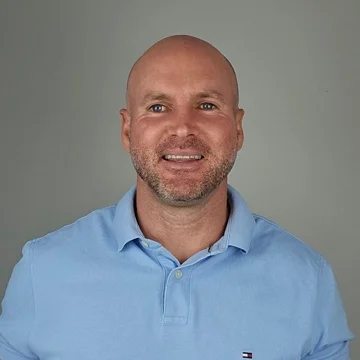
Joshua Stega is a financial adviser with 20 years' experience and the founder of ETF Adviser. He built ReviewETF to make every Australian ETF easy to find and compare.
General information only. It does not take into account your objectives, financial situation or needs. Consider the PDS and TMD before investing. Past performance is not a reliable indicator of future performance. Data as at 30 September 2026.