
In an account-based pension you must withdraw at least a set percentage each year, starting at 4% under 65 and rising to 5% from 65 and 6% from 75. A common way to fund that income is the bucket approach: one to three years of spending in a cash ETF such as AAA or BILL, a few more years in bonds such as VAF, and the rest in growth ETFs such as VAS and VGS. The cash bucket is what lets you avoid selling shares after a fall.
What changes when you move into pension phase
For most of your working life, super is about accumulation: money goes in, and you leave it alone. When you retire and start an account-based pension (through a retail or industry fund, or inside your SMSF), the job flips. Money now comes out, every year, for the rest of your life.
Three things make pension phase different:
- Tax. Investment earnings on money supporting a retirement-phase pension are generally tax-free inside super, up to the transfer balance cap. Payments to you are also generally tax-free from age 60.
- Compulsory withdrawals. You must take out at least a minimum amount each year, based on your age and your balance.
- A new enemy. When you are drawing an income, the order of returns matters as much as the average. A bad year early on can do lasting damage. This is called sequence risk, and it is the main thing a good pension portfolio is built to manage.
The minimum drawdown rules
The government sets a minimum percentage you must withdraw from an account-based pension each financial year. It is worked out on your balance at 1 July (or pro-rated in the year you start). There is no maximum for a standard account-based pension, so you can take more if you need it.
Minimum pension drawdown by age
For many retirees in their 60s and early 70s, 5% is a sensible anchor. If your portfolio earns more than you take out over time, the balance can hold up. In your 80s and 90s the minimum rises faster than most portfolios grow, so the balance is designed to run down.
One practical point: the minimum is a rule about what leaves the pension account, not about what you spend. If you don't need it all, you can invest the surplus outside super in your own name.
The bucket approach, in plain English
The bucket approach splits your money by when you will need it. It is not magic, and the total mix still drives your long-term return. What it does is give you a clear plan for where each year's income comes from.
- Bucket 1: cash (1 to 3 years of spending). This pays your pension. It earns a modest return but does not fall in value.
- Bucket 2: bonds and defensive assets (about 3 to 5 more years). This refills bucket 1. Bonds can move up and down, but much less than shares.
- Bucket 3: growth (everything else). Australian and global shares. This is the engine that keeps your income rising with the cost of living over 20 to 30 years.
In good years, you top up the cash bucket by trimming shares. In bad years, you leave the shares alone and live off cash and bonds until markets recover. That simple rule is the whole point.
Sequence risk: why the order of returns matters
Here is an illustration. Two retirees each start with $500,000 and withdraw $30,000 at the start of every year. Both get exactly the same five annual returns: one year of minus 15% and four years of plus 8%. The only difference is the order.
Same returns, different order, different outcome
Without any withdrawals, both would end at exactly the same $578,208. With withdrawals, the retiree who hit the bad year first ends about $31,000 worse off after five years, and the gap keeps compounding. They sold units at low prices to pay the bills, so they had fewer units left to enjoy the recovery.
The bucket approach attacks this directly. If that first retiree had two years of income in cash, they could have paid themselves from cash in the bad year and left their shares to recover.
Which ETFs fill each bucket
Each bucket has a different job, so the ETFs look very different. Here is how some of the common building blocks have performed.
| Bucket | ETF | Fee | Size | 1 year | 5 years (a year) |
|---|---|---|---|---|---|
| 1. Cash | AAA | 0.18% | $5.1bn | +4.1% | +3.2% |
| 1. Cash | BILL | 0.07% | $1.3bn | +4.0% | +3.1% |
| 2. Bonds | VAF | 0.10% | $3.9bn | -0.4% | -0.1% |
| 2. Bonds | IAF | 0.10% | $3.7bn | -0.4% | -0.2% |
| 3. Growth | VAS | 0.07% | $26.7bn | +2.2% | +6.5% |
| 3. Growth | VGS | 0.18% | $18.7bn | +10.1% | +11.8% |
Total returns including distributions to 30 September 2026; 5-year figures are per year. Source: TMX Australia monthly funds report.
How the building blocks have performed
- Cash: AAA and BILL. Both hold bank deposits and have tracked the cash rate closely, at around 4% over the past year. BILL is cheaper at 0.07% a year against 0.18% for AAA. See AAA vs BILL and all high interest cash ETFs.
- Bonds: VAF and IAF. These are near twins (VAF vs IAF). Note the honest lesson in the numbers: over five years they returned slightly less than zero, because interest rates rose sharply from 2022. Bonds are steadier than shares, not risk-free. Over three years they returned about 3.4% a year as yields reset higher. More options in fixed income ETFs.
- Growth: VAS and VGS. Australian shares pay franked distributions, which can be especially valuable in pension phase because excess franking credits can be refunded to a tax-free fund. Global shares add diversification beyond banks and miners. See VAS vs VGS.
Or keep it simple with one fund
Some retirees would rather not manage three buckets. An all-in-one ETF holds a fixed mix of shares and bonds and rebalances for you. The trade-off is that you lose the separate cash bucket, so in a downturn you are selling a slice of everything, shares included.
How much is defensive vs growth
- VDCO (Vanguard Conservative) is about 70% bonds and cash. It returned 2.5% a year over five years.
- VDBA (Vanguard Balanced) is about half and half, and returned 4.0% a year over five years.
- DHHF (Betashares All Growth) is 100% shares, and returned 9.2% a year. On its own it is too volatile for most retirees' whole pension, but it can work as the growth bucket alongside separate cash and bonds. See VGS vs DHHF.
One combination some retirees use: a cash ETF for two years of income plus VDBA or a similar balanced fund for the rest. It is simple, and still gives you the buffer. Browse every diversified ETF.
Distributions or selling units?
Many retirees like the idea of living off distributions alone and never touching the capital. It feels safe, but it can push you into higher-yield funds that are less diversified, and distributions themselves rise and fall with company profits.
A total return approach is usually more flexible: you take distributions as they come, and sell units as needed to make up the rest of your pension. Your income comes from the whole return, not just the income part of it. The cash bucket smooths the timing, because distributions from shares often arrive quarterly or half-yearly while your pension is paid monthly.
If you do lean towards income, see our guide to high dividend yield ETFs, and remember that a high yield today is not the same as a high total return.
Fees still matter in retirement
What each building block costs a year
On a $500,000 pension, the gap between a 0.10% and a 0.27% fee is about $850 a year. That is not a reason to avoid an all-in-one fund if the simplicity helps you stick to the plan, but it is worth knowing what you pay for.
Compare these ETFs side by side →
For more ideas, read best ETFs for Australian retirees and best ETFs for your SMSF.
Common questions
What is the minimum pension drawdown at age 65?
For an account-based pension the standard minimum is 5% of your balance at 1 July for ages 65 to 74. It is 4% under 65, 6% from 75 to 79, and higher again from 80. You can withdraw more than the minimum at any time.
How much cash should a retiree hold?
A common rule of thumb is one to three years of planned spending in cash, with several more years in bonds. The aim is to avoid selling shares after a fall. The right amount depends on your income needs, other assets and how you feel about market swings.
Can I hold ETFs in an SMSF pension?
Yes. An SMSF can hold ASX-listed ETFs in both accumulation and pension phase, provided the investments fit the fund's written investment strategy. Earnings on assets supporting a retirement-phase pension are generally tax-free.
Is a 5% withdrawal rate sustainable?
It depends on your returns, fees and how long you live. A diversified portfolio that earns more than 5% over time can sustain it; a conservative one may slowly run down. Higher minimums from age 80 are designed to draw the balance down over time.
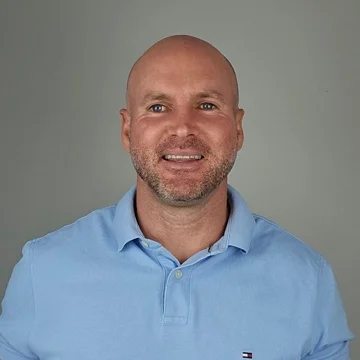
Joshua Stega is a financial adviser with 20 years' experience and the founder of ETF Adviser. He built ReviewETF to make every Australian ETF easy to find and compare.
General information only. It does not take into account your objectives, financial situation or needs. Consider the PDS and TMD before investing. Past performance is not a reliable indicator of future performance. Data as at 30 September 2026.