
Yes, if your fund offers a direct investment option. AustralianSuper (Member Direct), Hostplus (Choiceplus), Cbus (Cbus Self Managed) and CareSuper (Direct Investment Option) all let you buy ASX-listed ETFs inside your super account. You keep super's tax benefits and choose the ETFs yourself. You pay a yearly fee of $150 to $264 for the option, brokerage on each trade and the ETF's own fee. You can generally put up to 80% of your balance into listed investments, and each menu is limited: only AustralianSuper offers all-in-one ETFs like DHHF and VDHG. Below a balance of about $50,000 in the option, the fixed fee usually makes it dearer than the fund's own indexed option.
What a direct investment option is
A direct investment option is a section of your normal super account where you choose the investments yourself. You move part of your balance into a cash account inside the option, then buy ASX 300 shares, ETFs, listed investment companies and term deposits through an online platform that works much like a share broker.
It's still the same super fund. Your money stays in super, with the same tax rules and the same preservation rules. Contributions are taxed at 15%, earnings in accumulation are taxed at up to 15% (10% on gains on assets held more than a year), and in a retirement-phase pension earnings are tax-free. Franking credits from Australian share ETFs offset that tax, and in pension phase any excess is refunded to your account.
The appeal for people in their 50s and 60s is control without the work of an SMSF: no trustee duties, no annual audit, no separate tax return. The trade-off is that you choose only from the fund's menu, inside the fund's limits.
Four big industry funds that offer it
These are the largest industry funds with an ETF menu open to new investors as at November 2026. Some smaller funds, including NGS Super and legalsuper, also run direct options, and so do retail funds and adviser platforms. Fees are for the direct option only. You also pay your fund's normal administration fee on your whole account.
| Fund and option | Yearly option fee | Brokerage | ETFs on the menu | Minimum balance | Most in listed investments |
|---|---|---|---|---|---|
| AustralianSuper Member Direct | $150 (shares, ETFs and LICs level) | $10 up to $12,500, then 0.08%, then 0.04% over $50,000 | 93 | $10,000 super, $50,000 Choice Income | 80% of your balance |
| Hostplus Choiceplus | $150 | $5 up to $6,500, $10 up to $13,000, then 0.07%, then 0.03% over $50,000 | 78 | More than $10,000 | 80% of your balance |
| CareSuper Direct Investment Option | $264 | $11.99 up to $13,000, then 0.09225% | 47 | Check the guide | 85% of your balance |
| Cbus Self Managed | Check the current guide | Check the current guide | 31 | Check the guide | 80% of your balance |
Sources: AustralianSuper Member Direct guide (1 July 2026), fee changes from 28 March 2026 and investment menu (1 October 2026); Hostplus Choiceplus guide (30 September 2026); CareSuper and Cbus websites, November 2026. Brokerage includes GST less reduced input tax credits. Cbus does not show its fees on its Self Managed page, so read its investment guide before you start.
How many ETFs each fund lets you buy
Two options you can no longer join
Funds can close these options, and when they do, you may have to sell.
- Australian Retirement Trust (QSuper) Self Invest closed to new investors on 1 July 2023. Existing users can stay. It is also one of the dearer options, with a $299 access fee plus 0.10% a year and brokerage from $19.98 a trade.
- TelstraSuper Direct Access closed as part of the merger with Aware Super. New investments stopped on 24 November 2025 and members had until 9 January 2026 to sell. Anything left was sold for them and the cash went into their normal investment option. Holdings could not be moved to another fund as shares. They had to be sold first.
That second point matters. If your fund merges or closes the option, your ETFs are usually sold, and in accumulation phase any capital gain is taxed inside the fund. It is a good reason not to treat a direct option as permanent.
Which popular ETFs are on each menu
The menus overlap on the biggest index funds, but there are gaps. The most surprising: if you want a single all-in-one ETF such as DHHF or VDHG, only AustralianSuper offers one.
| ETF | What it holds | Fee | AustralianSuper | Hostplus | CareSuper | Cbus |
|---|---|---|---|---|---|---|
| VAS | Australian shares (ASX 300) | 0.07% | ✓ | ✓ | ✓ | ✓ |
| IOZ | Australian shares (ASX 200) | 0.05% | ✓ | ✓ | ✓ | ✓ |
| A200 | Australian shares (ASX 200) | 0.04% | ✓ | ✓ | – | – |
| VHY | Australian high-dividend shares | 0.25% | ✓ | ✓ | ✓ | ✓ |
| IVV | US shares (S&P 500) | 0.04% | ✓ | ✓ | ✓ | ✓ |
| VGS | Global shares | 0.18% | ✓ | ✓ | ✓ | – |
| BGBL | Global shares | 0.08% | ✓ | ✓ | – | – |
| VGAD | Global shares, currency hedged | 0.21% | ✓ | ✓ | ✓ | – |
| NDQ | Nasdaq 100 | 0.48% | ✓ | ✓ | ✓ | – |
| DHHF | All-in-one, 100% shares | 0.19% | ✓ | – | – | – |
| VDHG | All-in-one, about 90% shares | 0.27% | ✓ | – | – | – |
| VAF | Australian bonds | 0.10% | ✓ | ✓ | ✓ | ✓ |
| AAA | Cash | 0.18% | – | – | ✓ | ✓ |
| GOLD | Physical gold | 0.40% | ✓ | ✓ | ✓ | – |
From each fund's published ETF list, November 2026. Menus change, and some ETFs have their own limit of 20%, 25% or 50% of your balance. Check the current list before you invest.
A simple two-fund mix, an Australian shares ETF plus a global one, is possible on every menu. At Cbus, which doesn't list VGS, the broad global choice is WXOZ, which AustralianSuper no longer offers. Cash ETFs are missing from AustralianSuper and Hostplus because both give you a cash account and term deposits inside the option.
What it really costs
Because the option fee is a flat dollar amount, it hits small balances hardest. Here is what AustralianSuper or Hostplus ($150 a year) and CareSuper ($264) cost each year as a share of the money in the direct option, assuming four $10,000 trades a year. Add the ETF's own fee on top.
Option fee plus brokerage, as a share of the money you hold in it
For comparison, AustralianSuper's own Indexed Diversified option charges investment fees of 0.06% a year (2025-26). So a member with $50,000 who buys VAS and IVV through Member Direct pays about 0.38% plus the ETF fees, several times the cost of simply choosing the indexed option. At $250,000 the gap mostly closes.
The cost case for a direct option rests on what you want to hold. If you want something the fund's own options don't offer, such as a 100% shares portfolio, a high-dividend tilt for franking credits, gold or a specific index, a direct option can be worth paying for. If you just want low-cost index exposure, most funds' indexed options already do that cheaply.
Yearly fee for the direct option
The rules that catch people out
- You can't go all in. AustralianSuper, Hostplus and Cbus cap listed investments at 80% of your total balance, and CareSuper at 85%. Single shares are capped at 20%, and many ETFs at 20% or 50%. You also have to keep a minimum elsewhere in the fund: $5,000 at AustralianSuper, $2,000 at Hostplus and $6,000 at CareSuper.
- Minimum trades. AustralianSuper and Hostplus have a $1,500 minimum buy, and CareSuper $500. Small, regular top-ups are harder than with an ordinary broker.
- No transition to retirement. None of the four allow the direct option in a TTR income account.
- No moving shares between funds. If you change funds, your ETFs are sold first, and any gain is taxed in accumulation.
- Same-day trades. Hostplus and CareSuper don't let you buy and sell the same security on the same day. That's no problem for long-term investors.
In retirement: using a direct option in your pension
This is where the direct option can be most useful, and where the rules tighten. In a retirement-phase pension, ETF distributions and capital gains are tax-free and franking credits are refunded in cash. That makes franked Australian share ETFs such as VHY worth noticeably more. Our franking credit calculator shows how much.
- AustralianSuper Choice Income needs $50,000 to use Member Direct. You must keep at least $5,000, or 13 months of pension payments, whichever is greater, in other options.
- Hostplus pension members must keep an Income Payment Reserve of 1.5 times their minimum yearly pension outside Choiceplus.
- CareSuper Flexible Income requires the greater of $6,000 or 10% of your balance in other options. CareSuper says you may be able to move Direct Investment Option holdings into a Flexible Income account without selling, but only when you transfer your whole balance.
Before you start a pension, ask your fund whether your ETFs can move across without being sold. Selling in accumulation means paying tax on the gains inside the fund just before you reach the stage where gains are tax-free. For more on structuring income, see turning your ETFs into retirement income.
Direct option or SMSF?
An SMSF lets you hold any ETF on the ASX or TMX, at any weighting, plus property and other assets. But it comes with an annual audit, a tax return, the ATO levy, trustee duties and accounting fees, which together usually run to a few thousand dollars a year. A direct option costs $150 to $264 a year plus brokerage, and the fund handles the paperwork.
For most people with less than a few hundred thousand dollars, or who just want a handful of index ETFs, a direct option inside a large fund is cheaper and simpler. An SMSF starts to make more sense with a larger balance, when you want investments the menus don't offer, or when a couple wants to pool their super. Our super vs SMSF comparison works through the numbers, and the best ETFs for your SMSF covers what to hold.
Is it worth it? A quick checklist
- Do you want something your fund's options don't offer? If not, the fund's indexed option is probably cheaper.
- Will you hold at least $50,000 in the option? Below that, the fixed fee takes a large bite.
- Is the ETF you want on the menu, and what's its limit? Check the fund's list.
- Will you leave it alone? Easy trading inside super makes it tempting to react to the news. Our market correction playbook explains why that usually costs money.
- Are you near retirement? Ask how holdings move to a pension before you buy.
To see how a few ETFs fit together before you pick, use the portfolio X-ray or compare ETFs side by side.
Common questions
Can I buy ETFs in my industry super fund?
Yes, if your fund has a direct investment option. AustralianSuper, Hostplus, Cbus and CareSuper all offer one with an ETF menu. Many other funds don't, and offer low-cost indexed options instead. Check your fund's investment menu.
How much does AustralianSuper Member Direct cost?
From 28 March 2026, $150 a year for the shares, ETFs and LICs level, plus brokerage of $10 on the first $12,500 of each trade, 0.08% on the next $37,500 and 0.04% above $50,000. Your normal AustralianSuper fees and each ETF's own fee also apply.
Can I put my whole super balance into ETFs?
No. The industry fund options cap listed investments at 80% (85% at CareSuper) and require a minimum in the fund's other options. Only an SMSF, or some retail platforms, allow close to 100%.
Can I hold DHHF or VDHG in my super fund?
Of the four industry fund options, only AustralianSuper Member Direct lists DHHF, VDHG and the other Vanguard diversified ETFs, as at November 2026.
What happens to my ETFs if I switch super funds?
They are sold and the cash is transferred. You cannot move ETFs from one fund's direct option to another fund. In accumulation phase, any capital gain is taxed inside the fund when they're sold.
Can I use a direct option in a transition to retirement pension?
Not with any of the four industry funds covered here. All exclude TTR income accounts.
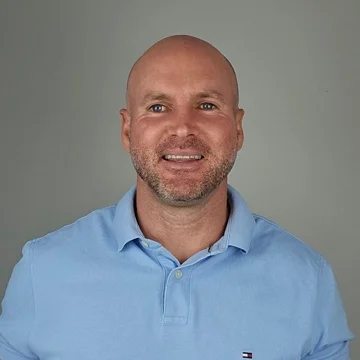
Joshua Stega is a financial adviser with 20 years' experience and the founder of ETF Adviser. He built ReviewETF to make every Australian ETF easy to find and compare.
General information only. It does not take into account your objectives, financial situation or needs. Consider the PDS and TMD before investing. Past performance is not a reliable indicator of future performance. Data as at 30 September 2026.