
The closest like-for-like alternative is A200 and BGBL, which costs 0.068% a year on a 30/70 split against 0.147% for VAS and VGS. If you want one fund that does everything, DHHF holds about 8,000 shares across Australia, developed and emerging markets for 0.19%. If you want bonds in the mix, VDHG or VDGR.
Why look for an alternative?
VAS and VGS became the go-to Australian ETF portfolio almost a decade ago, when there were far fewer choices. There are now more than 500 ETFs on the ASX, and three things have changed: fees have fallen, all-in-one funds have arrived, and there are more ways to add emerging markets or manage currency. VAS and VGS are still good funds, with $27 billion and $19 billion invested, but they are no longer the only sensible option, or the cheapest.
The table below compares the main alternatives on the same basis. For the two- and three-ETF portfolios we use a 30% Australian and 70% international split.
| Portfolio | Type | Fee a year | Cost on $100k | 1 year | 3 years |
|---|---|---|---|---|---|
| VAS + VGS | The classic | 0.147% | $147 | +4.1% | +58.9% |
| A200 + BGBL | Two ETFs | 0.068% | $68 | +4.6% | +60.9% |
| IOZ + IWLD | Two ETFs, ESG-screened global | 0.078% | $78 | +4.1% | +59.7% |
| A200 + HGBL | Two ETFs, currency hedged | 0.089% | $89 | +10.2% | +69.8% |
| VAS + VGS + VGE | Three ETFs, adds emerging markets | 0.177% | $177 | +3.2% | +56.4% |
| A200 + BGBL + BEMG | Three ETFs, cheaper emerging markets | 0.095% | $95 | +4.7% | n/a |
| DHHF | One ETF, 100% shares | 0.19% | $190 | +4.5% | +56.2% |
| VDAL | One ETF, 100% shares | 0.27% | $270 | +5.5% | n/a |
| VDHG | One ETF, 90% growth | 0.27% | $270 | +5.1% | +52.4% |
| VDGR | One ETF, 70% growth | 0.27% | $270 | +4.0% | +43.1% |
Weighted management fees. Two-ETF portfolios use a 30/70 split; three-ETF portfolios 30/60/10. Total returns to 31 October 2026, weighted by the split and not rebalanced; 3-year returns are cumulative. n/a: fund less than three years old. Source: TMX Australia monthly funds report.
What each portfolio costs a year on $100,000
Cheaper two-ETF combos edged ahead of VAS and VGS
Over three years, the cheaper two-ETF combos have finished slightly ahead of VAS and VGS, partly because of fees and partly because their indices are a little different. The all-in-one funds have lagged a little because they hold emerging markets and, in VDHG and VDGR's case, bonds. That is the price of convenience and a smoother ride, not a sign they are worse funds.
Option 1: one ETF instead of two
DHHF, the Betashares Diversified All Growth ETF, is a complete 100% shares portfolio in one fund: Australian shares, developed markets and emerging markets, big and small companies, about 8,000 shares in total. It charges 0.19% a year and rebalances itself, so you just keep adding money. The catch is that you can't change the mix, for example to hold less Australia.
VDAL is Vanguard's version, launched in March 2025 at 0.27%. It also covers global small companies, but its allocations and currency hedging differ from DHHF's. DHHF has the longer track record and the lower fee.
If you want something less volatile, VDHG holds about 90% growth assets and 10% bonds, and VDGR about 70% and 30%. Bonds soften the falls but also hold back returns when shares are rising. VanEck's new active diversified funds, VGRO (about 80% growth) and VHGR (100% growth), launched in April 2026 at 0.39% and add property, infrastructure and physical gold. They are still very small, at a few million dollars each.
For younger investors with a long time frame, GHHF is a geared all-growth fund that borrows inside the fund for roughly 1.4 to 1.7 times exposure. A 10% rise becomes about 15%, but so does a 10% fall, and borrowing costs come on top of its 0.35% fee on gross assets. Read our VDHG vs DHHF vs GHHF comparison.
Compare: VDHG vs DHHF, DHHF vs VDAL, DHHF vs GHHF.
Option 2: the same idea for half the fee
A200 (0.04%) and BGBL (0.08%) are the closest alternative to VAS (0.07%) and VGS (0.18%). A200 holds the 200 largest ASX companies against VAS's 300, and BGBL tracks a different developed markets index to VGS, but you end up with a very similar portfolio. On $100,000 split 30/70, you pay about $68 a year instead of $147.
iShares' IOZ (0.05%) and IWLD (0.09%) cost a similar 0.078%. The difference is that IWLD applies ESG screens, so it excludes some companies VGS and BGBL hold, and can perform differently. Check what it screens out before choosing it for ethical reasons.
Compare: VAS vs A200, VGS vs BGBL.
Don't hold two versions of the same thing
A common mistake is adding A200 to a portfolio that already holds VAS. About 94% of VAS by weight is in companies A200 also holds, at very similar weights, so you gain almost no diversification and add extra paperwork at tax time. The same goes for VGS and BGBL, or DHHF on top of VAS and VGS. Check your own ETFs with our free overlap calculator or the portfolio X-ray.
Option 3: hedged or unhedged
An unhedged international fund like VGS or BGBL is exposed to the Australian dollar: when the dollar falls, your overseas shares are worth more in Australian dollars, and when it rises, they are worth less. Hedged versions remove most of that effect. VGAD is the hedged version of VGS (0.21%) and HGBL is the hedged version of BGBL (0.11%).
Hedging made a big difference this year
Over the past year, hedging made a big difference: HGBL returned 13.0% against 4.9% for BGBL, because the Australian dollar rose. Over longer periods it can go the other way. Some investors split their international shares between hedged and unhedged to avoid making a big call either way. See our hedged ETFs list.
Option 4: add emerging markets
VGS and BGBL only cover developed markets. To add China, Taiwan, India and other emerging markets, you need a third fund. VGE (0.48%) is Vanguard's option; a 30/60/10 VAS, VGS, VGE portfolio costs about 0.177%. Betashares' BEMG (0.35%) brings the A200 and BGBL version down to 0.095%, but it follows a different index and invests through an underlying fund that uses swap agreements, which adds counterparty risk. See all emerging markets ETFs.
Every extra fund adds a decision: how much Australia, how much emerging markets, how much currency hedging and when to rebalance. That is the main argument for an all-in-one fund like DHHF.
What all of these portfolios miss
Broad index funds give the biggest companies the biggest weights. In Australia that means banks and miners; globally, it means large US companies. A theme or region that makes up 1% of your portfolio adds only about half a percentage point to your return even if it rises 50%. And none of these funds hold physical gold.
That is why many investors pair one diversified core fund with a few smaller "satellite" positions in areas they want more of, such as gold, a particular country or a theme. Just check those satellites don't simply repeat what your core already holds: a semiconductor ETF, for example, adds more of the same big chip companies that are already in VGS and DHHF. See our guides to building your core and building your satellites.
Which alternative suits you?
- You want the lowest cost and are happy managing two funds: A200 and BGBL.
- You want ethical screens on the global part: IOZ and IWLD.
- You want one fund that does everything: DHHF, or VDAL if you prefer Vanguard.
- You want a smoother ride: VDHG or VDGR.
- You want emerging markets with control over the mix: add VGE or BEMG as a third fund.
- You already own VAS and VGS: keep them, and consider directing new money to a cheaper or simpler option.
Compare these ETFs side by side →
Common questions
What is the cheapest alternative to VAS and VGS?
A200 and BGBL. On a 30% Australian, 70% international split, they cost about 0.068% a year, compared with 0.147% for VAS and VGS. That is about $68 a year on $100,000 instead of $147.
Is DHHF better than VAS and VGS?
It is simpler rather than better. DHHF holds Australian, developed and emerging markets shares in one fund and rebalances itself for 0.19% a year. VAS and VGS cost less in total but you have to manage the split yourself, and they don't include emerging markets.
Should I hold A200 and VAS together?
There is little point. About 94% of VAS by weight is in companies A200 also holds, so holding both adds complexity without meaningful diversification.
Should I sell VAS and VGS to switch to cheaper ETFs?
Usually not, if you would pay capital gains tax. The fee saving is small each year, so it can take many years to make up a tax bill. Directing new investments into the cheaper funds is often the better approach.
Do VAS and VGS include emerging markets?
No. VGS covers developed markets outside Australia. To add emerging markets you need a separate fund such as VGE or BEMG, or an all-in-one fund such as DHHF or VDHG.
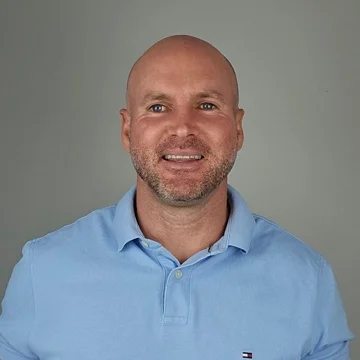
Joshua Stega is a financial adviser with 20 years' experience and the founder of ETF Adviser. He built ReviewETF to make every Australian ETF easy to find and compare.
General information only. It does not take into account your objectives, financial situation or needs. Consider the PDS and TMD before investing. Past performance is not a reliable indicator of future performance. Data as at 31 October 2026.