
How strictly a fund screens matters more than the label. Light-touch ESG funds like E200 (0.05% a year) and IWLD (0.09%) have kept pace with the plain index over five years to 30 September 2026. Strict "sustainability leaders" funds like FAIR and ETHI cost 0.49% to 0.59% and look very different from the market, which has cost them lately: FAIR returned 1.2% a year over five years against 6.5% for VAS.
Ethical, ESG, sustainable: what the labels mean
These words get used loosely, so it helps to know what each fund actually does. ESG stands for environmental, social and governance: a way of rating companies on things like carbon emissions, labour practices and board quality. On the ASX, ethical and ESG funds follow four broad approaches.
- Light exclusions and tilts. Remove a short list of industries such as tobacco and controversial weapons, drop the worst ESG scorers, and keep the rest of the market. Examples: E200, IESG, IWLD, and the carbon-aware WXOZ.
- Negative screens. Exclude whole industries, usually fossil fuels, gambling, tobacco, alcohol and weapons, then hold everything else by size. Examples: Vanguard's VETH and VESG.
- Sustainability leaders. Strict exclusions plus a requirement that companies are judged to be doing good, which leaves a much narrower portfolio. Examples: Betashares FAIR, ETHI and its hedged twin HETH, VanEck GRNV and ESGI.
- Climate themes. Funds that buy solutions rather than avoid problems: clean energy, electrification and waste. Examples: ERTH, CLNE and the active MCCL.
Australian shares: every ethical fund
| ETF | Approach | Fee | Size | 1 year | 3 years (a year) | 5 years (a year) |
|---|---|---|---|---|---|---|
| FAIR Betashares | Sustainability leaders, about 80 stocks | 0.49% | $1,028m | -12.5% | 4.7% | 1.2% |
| VETH Vanguard | Negative screens, about 225 stocks | 0.16% | $651m | -4.6% | 10.6% | 5.3% |
| IESG iShares | ESG-rated leaders, about 90 stocks | 0.09% | $607m | -3.0% | 9.7% | 5.9% |
| E200 State Street | ASX 200 with light ESG screens | 0.05% | $474m | +3.0% | 10.5% | 7.0% |
| RARI Russell | Responsible investment screens | 0.45% | $427m | -4.9% | 10.6% | 5.4% |
| GRNV VanEck | Sustainability leaders, about 80 stocks | 0.35% | $250m | -4.1% | 9.8% | 5.3% |
| ASUS Ausbil | Active, listed May 2026 | 0.59% | $405m | n/a | n/a | n/a |
| VAS (for comparison) | ASX 300, no screens | 0.07% | $26,675m | +2.2% | 10.8% | 6.5% |
Total returns including distributions to 30 September 2026. Smaller active funds (GIVE, AEAE, IMPQ) are on the ethical and ESG ETFs page. Source: TMX Australia monthly funds report and issuer holdings.
Five-year returns: ethical funds vs VAS
One thing stands out: none of the five with published holdings owns BHP, Australia's largest company and about 11% of VAS. What they do instead varies a lot:
- E200 stays close to the ASX 200. It still holds Woodside and Santos, so investors wanting a fossil-fuel-free fund should look elsewhere. It has been the best performer, and it took in $74 million in September alone.
- VETH holds all four big banks and excludes fossil fuel producers. It is 68% the same as VAS.
- FAIR holds none of the big four banks, BHP, Macquarie or Wesfarmers. Instead it leans on healthcare (about 20%) and property (about 18%). Only 24% of it overlaps with VAS, which explains why its returns have been so different.
Compare them directly: VAS vs VETH, VAS vs FAIR, STW vs E200 and IOZ vs IESG.
International shares: every ethical fund
| ETF | Approach | Fee | Size | 1 year | 3 years (a year) | 5 years (a year) |
|---|---|---|---|---|---|---|
| ETHI Betashares | Sustainability leaders, about 200 stocks | 0.59% | $3,805m | +6.2% | 14.0% | 8.5% |
| IWLD iShares | ESG-rated, developed world | 0.09% | $1,965m | +10.4% | 18.3% | 12.3% |
| VESG Vanguard | Negative screens, developed world | 0.18% | $1,604m | +12.4% | 19.5% | 11.7% |
| IHWL iShares | IWLD, hedged to the Australian dollar | 0.13% | $1,102m | +17.1% | 20.3% | 11.0% |
| WXOZ State Street | Carbon-aware world index | 0.07% | $858m | +7.6% | 16.9% | 9.3% |
| HETH Betashares | ETHI, hedged to the Australian dollar | 0.62% | $725m | +14.2% | 16.4% | 7.9% |
| ESGI VanEck | Sustainability leaders, about 140 stocks | 0.55% | $259m | +8.4% | 14.2% | 9.0% |
| VGS (for comparison) | Developed world, no screens | 0.18% | $18,679m | +10.1% | 17.9% | 11.8% |
Total returns including distributions to 30 September 2026. Hedged funds compare against hedged benchmarks, so their returns differ from VGS for currency reasons. Source: TMX Australia monthly funds report.
Fees and returns: ethical funds vs VGS
Globally, the low-cost ESG index funds have matched or beaten VGS. IWLD returned 12.3% a year over five years against 11.8% for VGS, and VESG returned 11.7%. Excluding oil, gas and mining companies appears to have made little difference to returns over this period, largely because the world index is driven by technology and finance companies.
See VGS vs VESG, VGS vs IWLD, ETHI vs VESG and ETHI vs HETH.
ETHI: tech-heavy, but not the tech you expect
ETHI is by far the most popular ethical ETF, with $3.8 billion invested, though it had $37 million of outflows in September. A common worry is that it is just a tech fund. The picture is more nuanced.
About 33% of ETHI is in information technology, a little more than VGS at about 30%. But its latest holdings include none of Microsoft, Alphabet, Amazon, Meta or Tesla. Its biggest positions are Visa, Apple, Mastercard, Nvidia and Broadcom, and it holds far more in financials (about 29%) than VGS does (about 12%). So it misses several of the giant companies that have driven world markets, which goes a long way to explaining why it trailed VGS by about 3% a year over five years.
How much each fund holds in the five biggest US tech names
VESG is the opposite case. Removing fossil fuel and other excluded companies makes the remaining big tech names a larger share of the fund than in VGS. If you choose an ethical global fund to reduce your exposure to the largest US companies, VESG will not do that.
How far from the index does each fund go?
Overlap with the plain index is a quick way to see how different an ethical fund really is.
How much of each fund matches the plain index
A fund with high overlap will track the market closely, for better and worse. A fund with low overlap, like FAIR or ETHI, can beat the market by a wide margin or trail it by a wide margin. Neither is wrong, but it is worth knowing which you have bought.
Check the overlap with your own funds →
Fees: ethical does not have to mean expensive
What fees cost on $100,000 over 20 years
The stricter the screening, the higher the fee tends to be, partly because the research behind them costs more. The difference between E200 and ETHI is more than $36,000 on $100,000 over 20 years. That is a fair price if the stricter screens match your values, but it is worth knowing you are paying it.
Climate and clean energy funds
Thematic climate funds have been the most volatile part of this space. $10,000 in ERTH five years ago was worth $7,555 at 30 September 2026, and in CLNE $8,583, even though CLNE gained 15.2% over the past year. The active MCCL has done far better, more than doubling over three years, but it charges 0.90% a year.
Climate themes vs the broad market
These funds suit investors who want a small, deliberate bet on a theme, not a core holding. See all clean energy ETFs.
Choosing an ethical ETF
- Want market returns with fewer controversial companies? Light-screen index funds like E200, IESG and IWLD stay close to the market at very low fees.
- Want firm fossil fuel exclusions? VETH and VESG exclude them while keeping broad diversification.
- Want the strictest screens? FAIR, ETHI and GRNV go furthest, but expect returns that can be very different from the market, in either direction.
- Holding for retirement income? A fund that drifts far from the market can have long stretches of lagging. Some investors pair a strict ethical fund with a broader one to balance values and steadiness.
- Read the exclusion list. Each issuer publishes what it excludes. Check it matches what you care about, because "ethical" means different things to different people.
Browse every fund on the ethical and ESG ETFs page, or line up a shortlist with the compare tool.
Common questions
What is the best ethical ETF in Australia?
It depends on how strict you want to be. E200 and IESG are the cheapest Australian options and have stayed close to the market. VETH and VESG exclude fossil fuels at low fees. FAIR and ETHI apply the strictest screens but have trailed the market over five years to 30 September 2026.
Do ethical ETFs perform worse?
Not necessarily. Globally, IWLD and VESG returned about the same as VGS over five years. In Australia, the strictest fund, FAIR, returned 1.2% a year against 6.5% for VAS, mainly because it avoids the big banks and miners that led the market.
Is ETHI a tech fund?
Partly. About a third of ETHI is technology, similar to VGS, but it holds none of Microsoft, Alphabet, Amazon, Meta or Tesla. Its largest holdings are Visa, Apple, Mastercard and Nvidia, and it holds much more in financials than VGS.
Do ethical Australian share ETFs still pay franked distributions?
Yes. Funds like VETH, FAIR and E200 own Australian companies, so their distributions usually carry franking credits. The amount depends on what each fund holds, so it can differ from VAS.
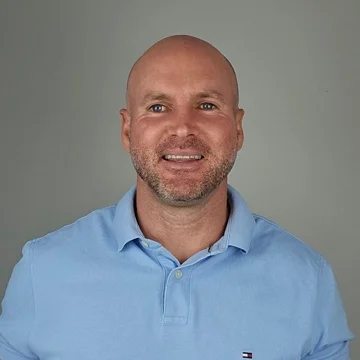
Joshua Stega is a financial adviser with 20 years' experience and the founder of ETF Adviser. He built ReviewETF to make every Australian ETF easy to find and compare.
General information only. It does not take into account your objectives, financial situation or needs. Consider the PDS and TMD before investing. Past performance is not a reliable indicator of future performance. Data as at 30 September 2026.